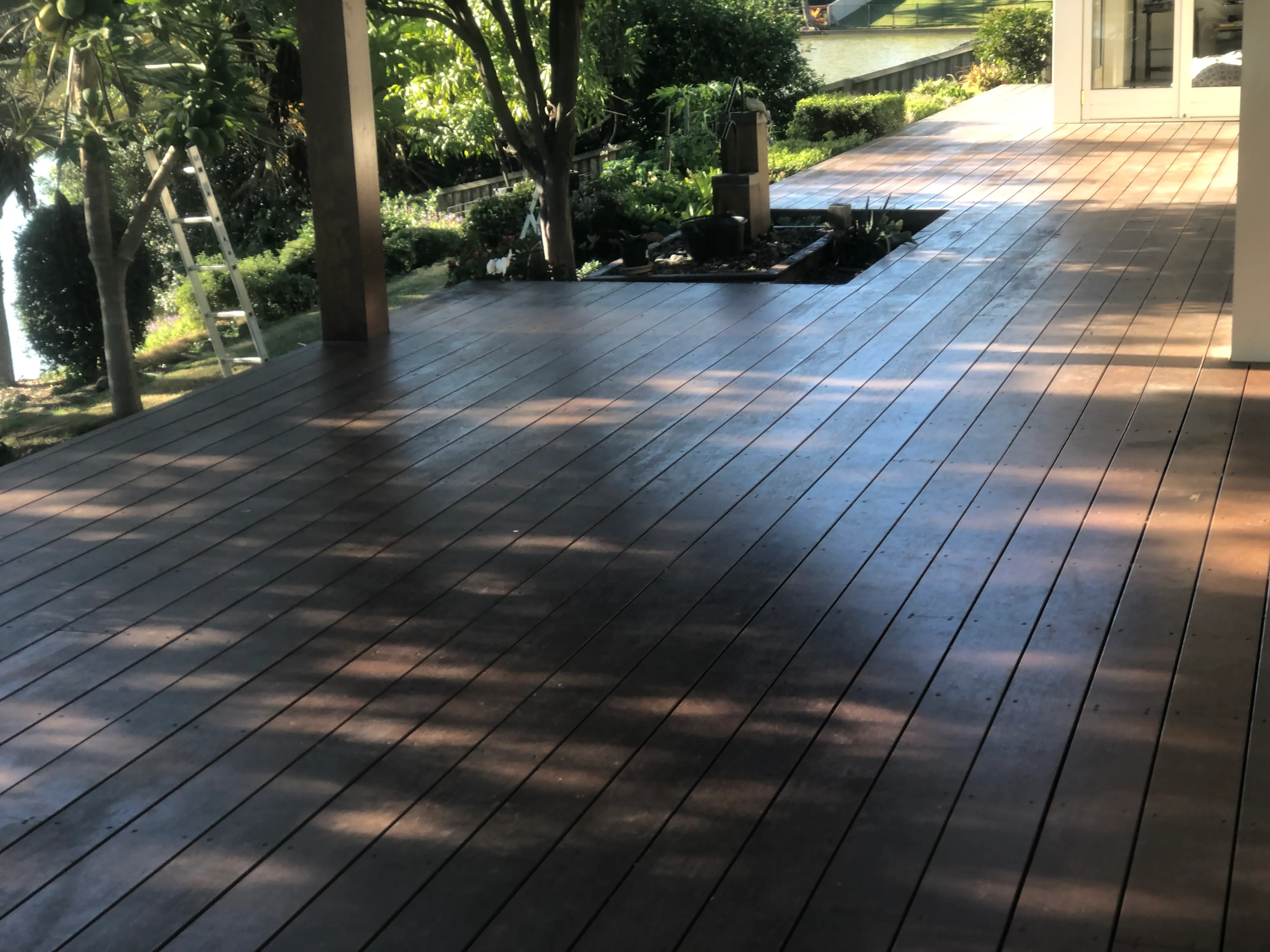
Placeholder copy — written to the final shape so design can be reviewed.
Fencing on the coast is a different job to fencing inland. Salt air, humidity, and UV don’t just weather timber — they find every weakness in the timber, the fixings, and the build. Pick the wrong timber and you’re replacing palings in three years.
Here’s what I recommend when clients ask about coastal fencing — and why.
The shortlist
Three timbers handle Gold Coast coastal exposure reliably:
- Spotted gum — the default for premium fencing. Hard, dense, high natural tannin content.
- Blackbutt — excellent middle ground. Good density, easier to work with than spotted gum.
- Merbau — reliable, widely available, handles coastal well with proper oil.
There are others that work — ironbark, tallowwood — but those three cover 90% of Gold Coast jobs and are the easiest to source clean.
What to avoid
- Treated pine. It works well inland and it fails on the coast. Salt accelerates the breakdown of the treatment, and the fixings corrode faster than the timber ages. Expect five to seven years before replacement.
- Cedar. Too soft for coastal exposure. It looks beautiful for two years and tired by year four.
- Reclaimed timber of unknown species. Lovely idea; unreliable result. Without knowing the timber species, you can’t predict how it’ll handle salt.
The fixings matter as much as the timber
This is the bit most fence builders skim past. On the coast, standard galvanised fixings start showing surface rust in months. You want:
- Stainless steel — 316 grade on waterfront jobs, 304 grade everywhere else.
- Hot-dipped galvanised — acceptable for non-waterfront coastal jobs if the spec is right.
- Never electro-plated, never zinc-only, never standard bright fasteners.
The timber you can replace. The fixings you can’t — not without pulling the whole fence apart.
Design choices that extend the life
Three small build choices make a five-year difference:
1. Concrete top-capped posts
A concrete cap at the top of the post sheds water off the end-grain. End-grain is where rot starts. A $3 cap adds years.
2. Off-ground palings
Palings that touch soil wick moisture up the grain. A 40–50mm gap between the paling base and the ground is standard on coastal fencing — and worth every millimetre.
3. Rail drip angles
Rails cut flat catch water. Rails cut with a slight drip angle shed it. A one-minute cut during the build saves a season’s worth of wear.
What to expect over the life of the fence
- Year 1–3: Timber darkens naturally. No work required beyond the occasional wash-down.
- Year 4–6: Surface greys. Oiling resets the colour for those who want it. Structurally, no work needed.
- Year 7–10: Fixings checked, any loose rails or palings refixed. Expect a handful of localised swaps.
- Year 10–15: First full oil service if none have been done, plus a structural check on posts.
- Year 15+: Depending on exposure, you’re approaching a rebuild on the most exposed runs. Sheltered runs can push well past twenty.
Those numbers assume the three timbers above, with stainless fixings, built properly. Substitute any of those inputs and the numbers shift.
When to oil and when to leave it
Oiling is a choice, not a requirement, on spotted gum and blackbutt. Both weather to a silver grey that some people love and some don’t.
- If you want the timber to look like the day it went in, plan for a yearly oil.
- If you’re happy with the silver finish, leave it — the timber is doing fine.
- Merbau bleeds heavy tannins for six to twelve months. If you want to skip the bleed, seal it early.
What it’ll cost to get right
A premium spotted gum fence with stainless fixings and proper post work sits at the higher end of fencing quotes — and it lasts close to twice as long as the entry-level build. On most coastal jobs, the premium build is the cheaper option over the fence’s life.
The tired maths: one fifteen-year fence beats two seven-year fences every time.
Planning a fence build on the Gold Coast? Get in touch — Scott handles coastal fencing from Coolangatta to Hope Island.