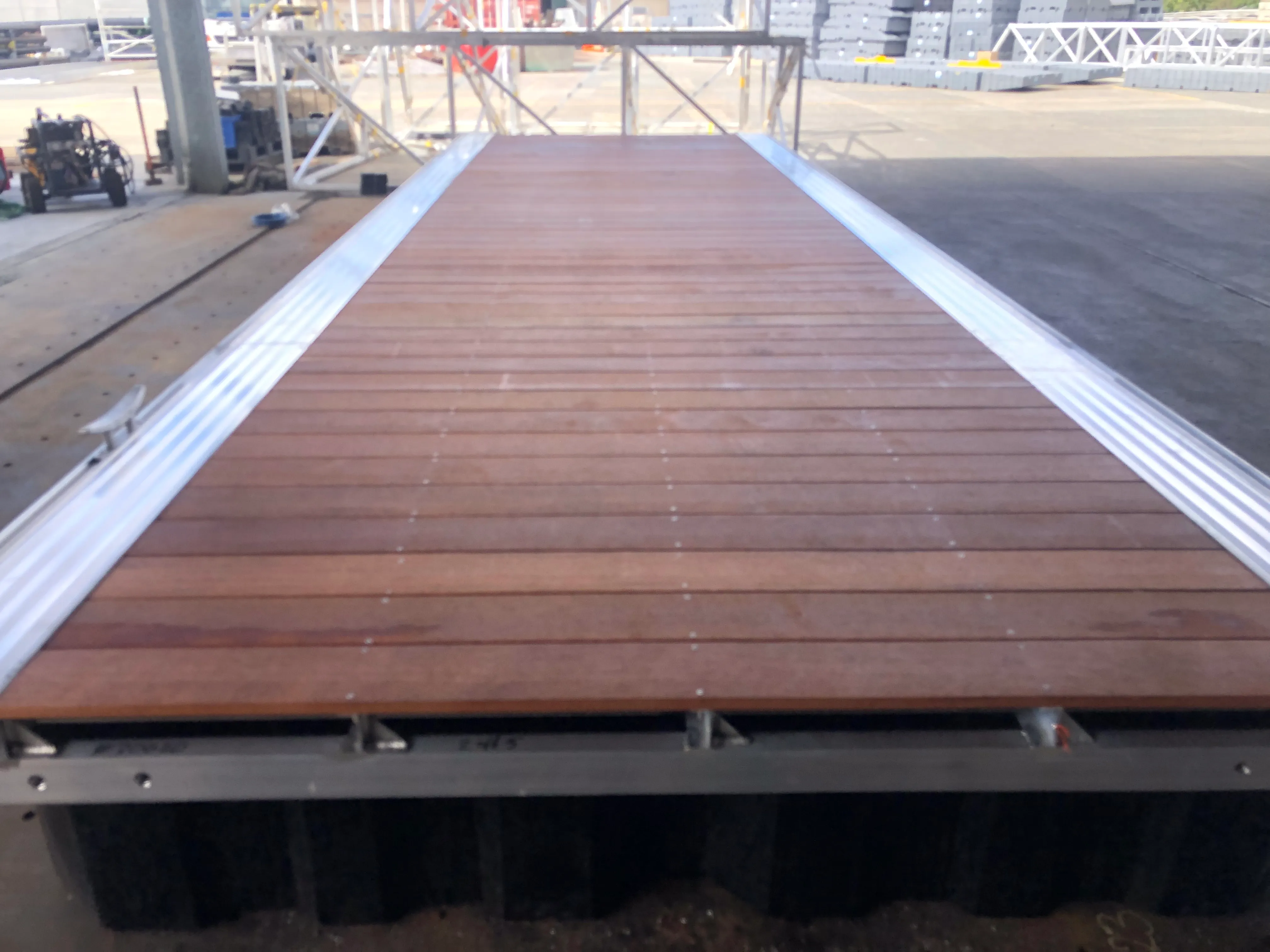
Placeholder copy — written to the final shape so design can be reviewed. Swap once real copy is signed off.
A deck on the Gold Coast works harder than most. Salt-laden sea breezes, summer thunderstorms, winter dry spells, UV that doesn’t let up — all of it lands on the same boards year after year. The decks that age gracefully aren’t the ones built from the most expensive timber. They’re the ones with a maintenance rhythm that doesn’t skip a season.
Here’s the rhythm I’ve landed on after 14 years working on Gold Coast decks — from Palm Beach waterfronts to hinterland hardwood spreads.
Start with what you’ve got
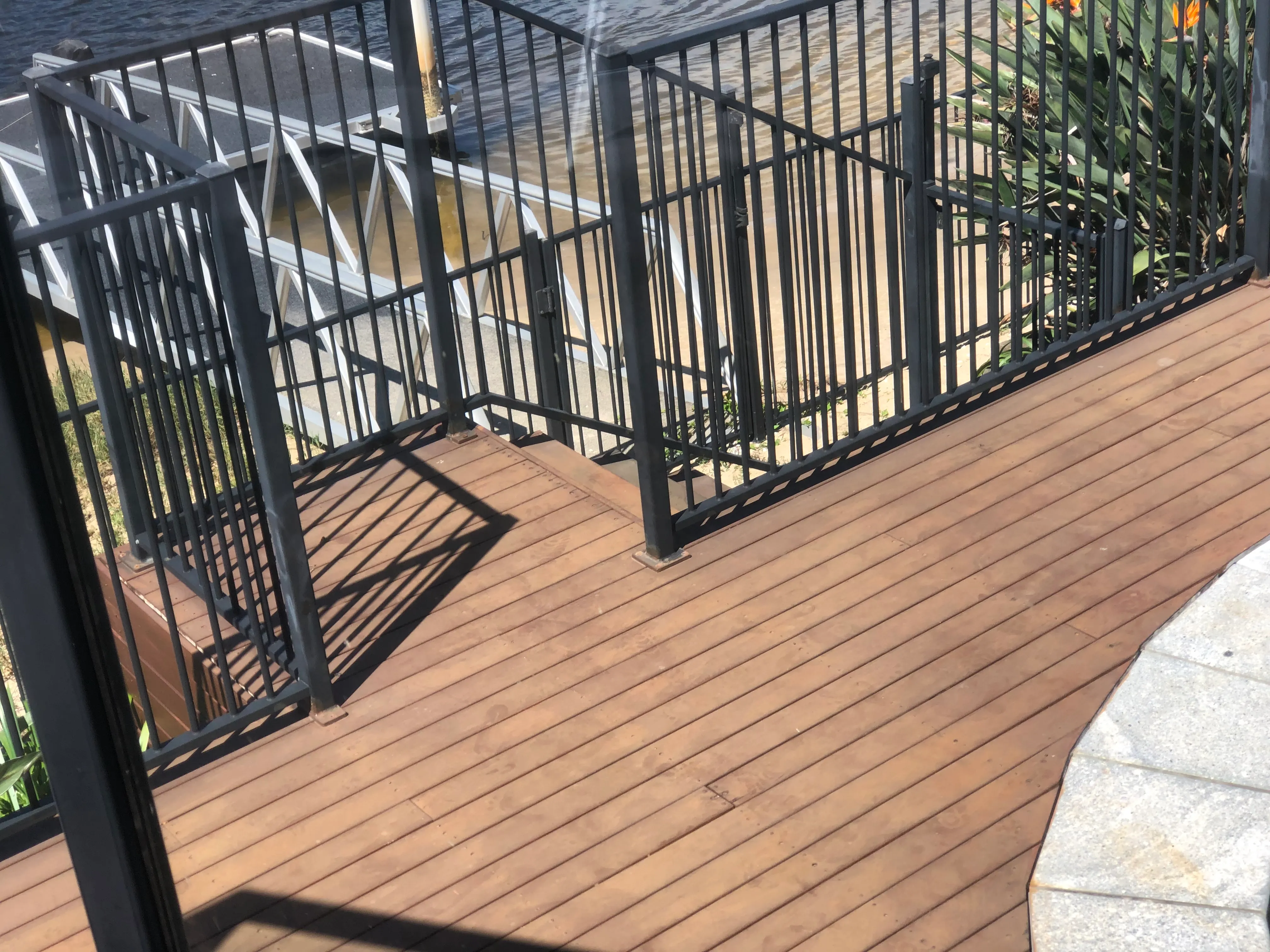
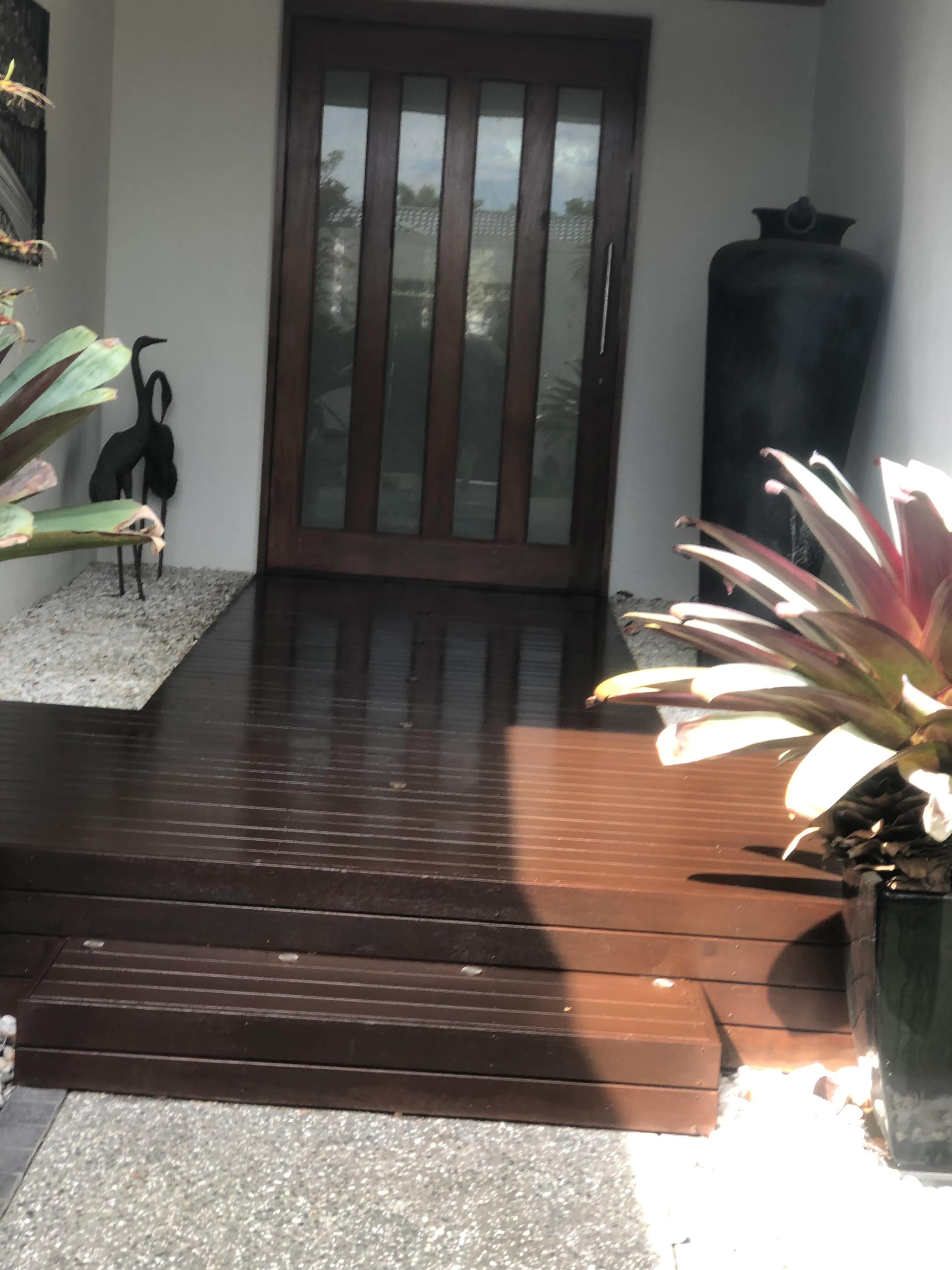
Before you commit to a routine, know the deck. Timber species, fixings, age, exposure — all of it changes what the deck needs. A spotted gum deck five metres from a saltwater pool wants different care to a merbau deck tucked under a north-facing eave.
Three quick checks
- Water test. Flick water onto the boards. If it beads, the finish is still doing its job. If it soaks in within ten seconds, the timber’s thirsty.
- Screw check. Walk the deck barefoot. Any screws proud of the surface, any spongy boards, any boards that flex underfoot — note them.
- Edge and end-grain. End-grain is where rot starts. Look at board ends, stair noses, and anywhere timber meets metal or concrete.
Write the results down. Next year you’ll have a baseline.
A yearly rhythm, season by season
Spring — the annual clean
Spring is for cleaning. A full wash knocks back the mould spores that built up over the wet season and resets the surface before summer hammering.
- Sweep leaf litter out of board gaps.
- Wash with a timber-safe cleaner — never household bleach. Bleach strips the lignin and greys the timber.
- Let it dry three to four days before any coating work.
Summer — spot repairs only
Summer on the Gold Coast is too hot and too wet for full coats. Finishes don’t bond cleanly when the air is sitting at 80% humidity. Use summer for:
- Tightening loose fixings.
- Replacing the one or two boards that didn’t make it through winter.
- Watching how the finish is holding up under the UV.
If you can’t walk on the deck in bare feet at midday, it’s too hot to work on. That’s a rule I tell every apprentice.
Autumn — the prep window
Autumn is the working season. Cooler mornings, lower humidity, consistent drying time. This is when the restoration-grade work happens.
- Sand back any grey patches to clean timber.
- Touch up or full-strip the finish, depending on age.
- Re-oil with the product that matches the timber. Hardwoods want penetrating oils, not film-building ones.
Winter — inspection and plan
Winter is cold, short, and drier than most people realise. Use it to:
- Inspect the structure. Bearers, joists, posts, connections. Torch and screwdriver.
- Plan any bigger work — a board replacement run, a balustrade upgrade, a reseal if you’re due.
- Book the tradie if it’s beyond a confident DIY. Good tradies book out from September; calling in June puts you near the top of the list.
The jobs worth getting help with
Not every maintenance task is a DIY job. The ones worth handing over:
- Any structural repair — replacing joists, bearers, posts, or dealing with rot.
- Full strip-and-re-oil on a deck older than eight years.
- Board runs longer than three metres — the handling alone is a two-person job.
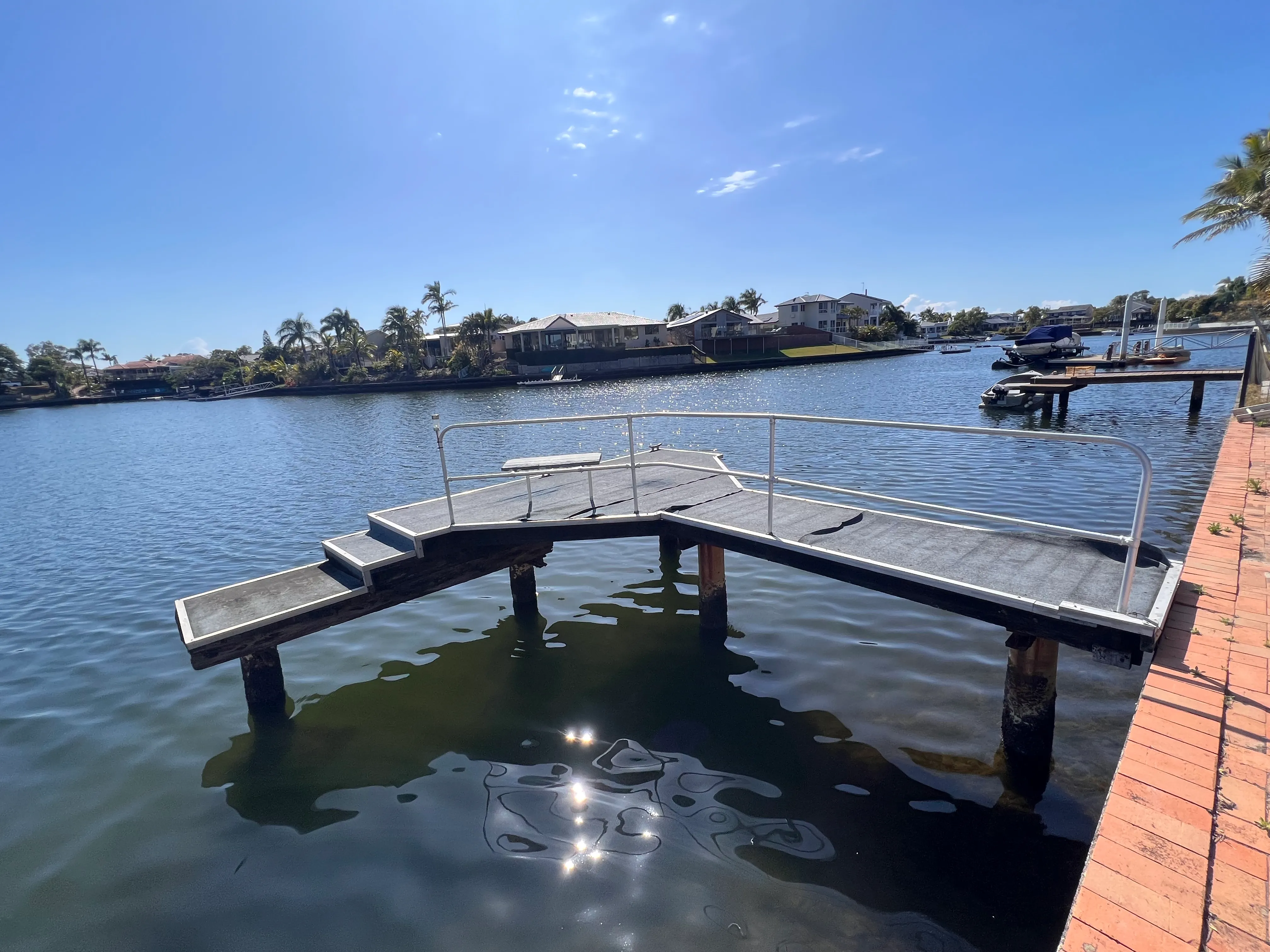
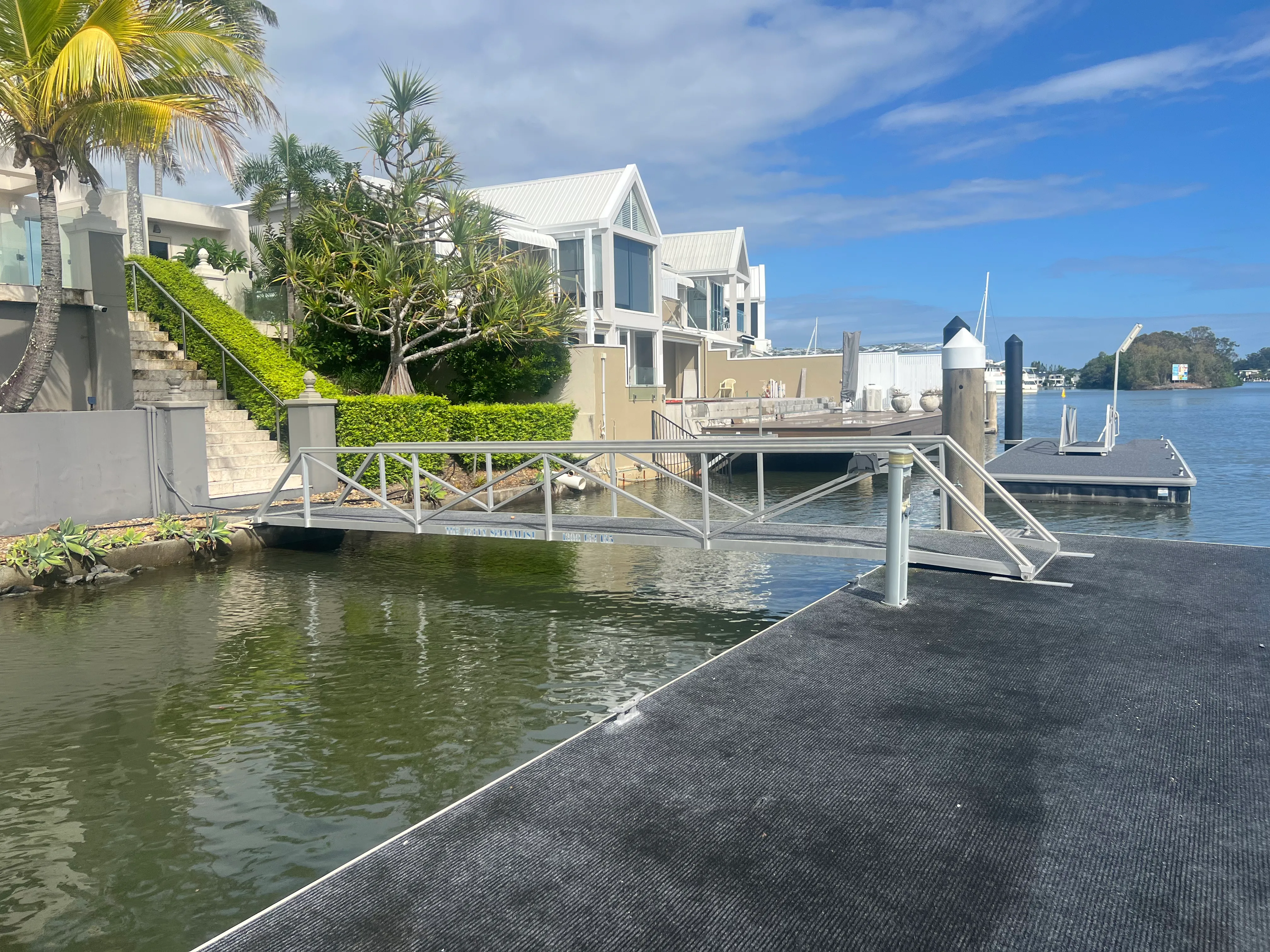
- Anything involving waterfront timber. Jetty and pontoon timber follows different rules, and the fixings are unforgiving if you get them wrong.
If the job’s bigger than a weekend, it’s usually a trade job. The cost of getting it wrong on a deck — warped boards, stripped fixings, stained finishes — is more than the call-out fee.
What changes with waterfront decks
Waterfront is its own game. Salt, tidal movement, and constant humidity pull finishes apart faster. Expect to reseal yearly, not every second or third year. Expect stainless fixings to show wear. Expect the end-grain to be the first thing to go.
Scott’s rule: if the deck faces open water, inspect it twice a year — spring and autumn. One small repair in autumn saves a full board run the following winter.
The short version
- Clean in spring.
- Repair in summer.
- Re-oil in autumn.
- Inspect in winter.
- Call a trade for anything structural or anything waterfront.
That’s the whole rhythm. It’s not glamorous. But decks that get it look fifteen years younger than the ones that don’t.
Need a hand with your Gold Coast deck? Scott handles restorations across the coast — from Coolangatta up to Hope Island. Get a quote and he’ll walk the deck with you.