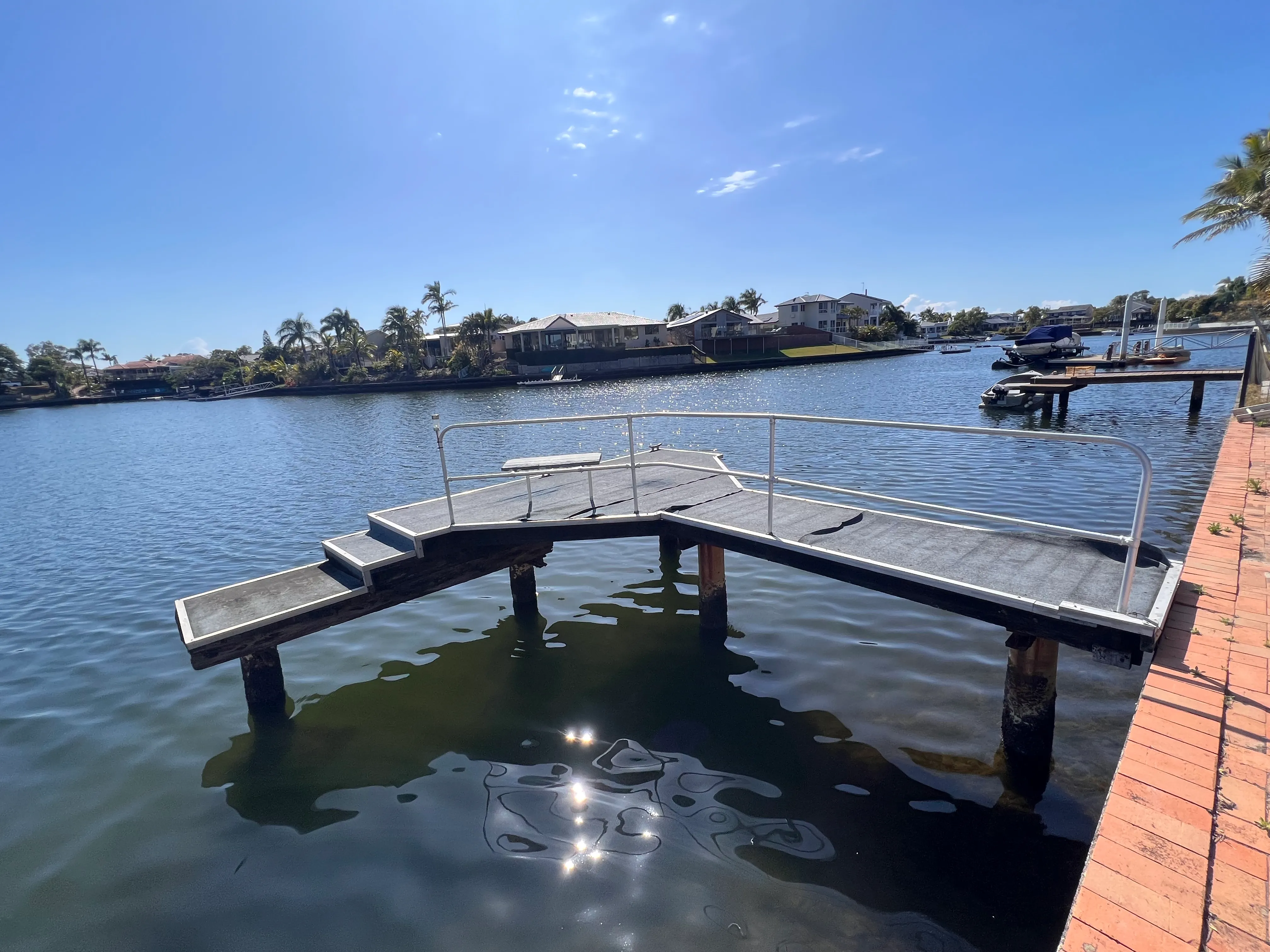
Placeholder copy — written to the final shape so design can be reviewed.
“Every two years” is the answer you’ll get from most product tins. On the Gold Coast, that answer is usually wrong — and almost always in the direction of “you should have resealed six months ago.”
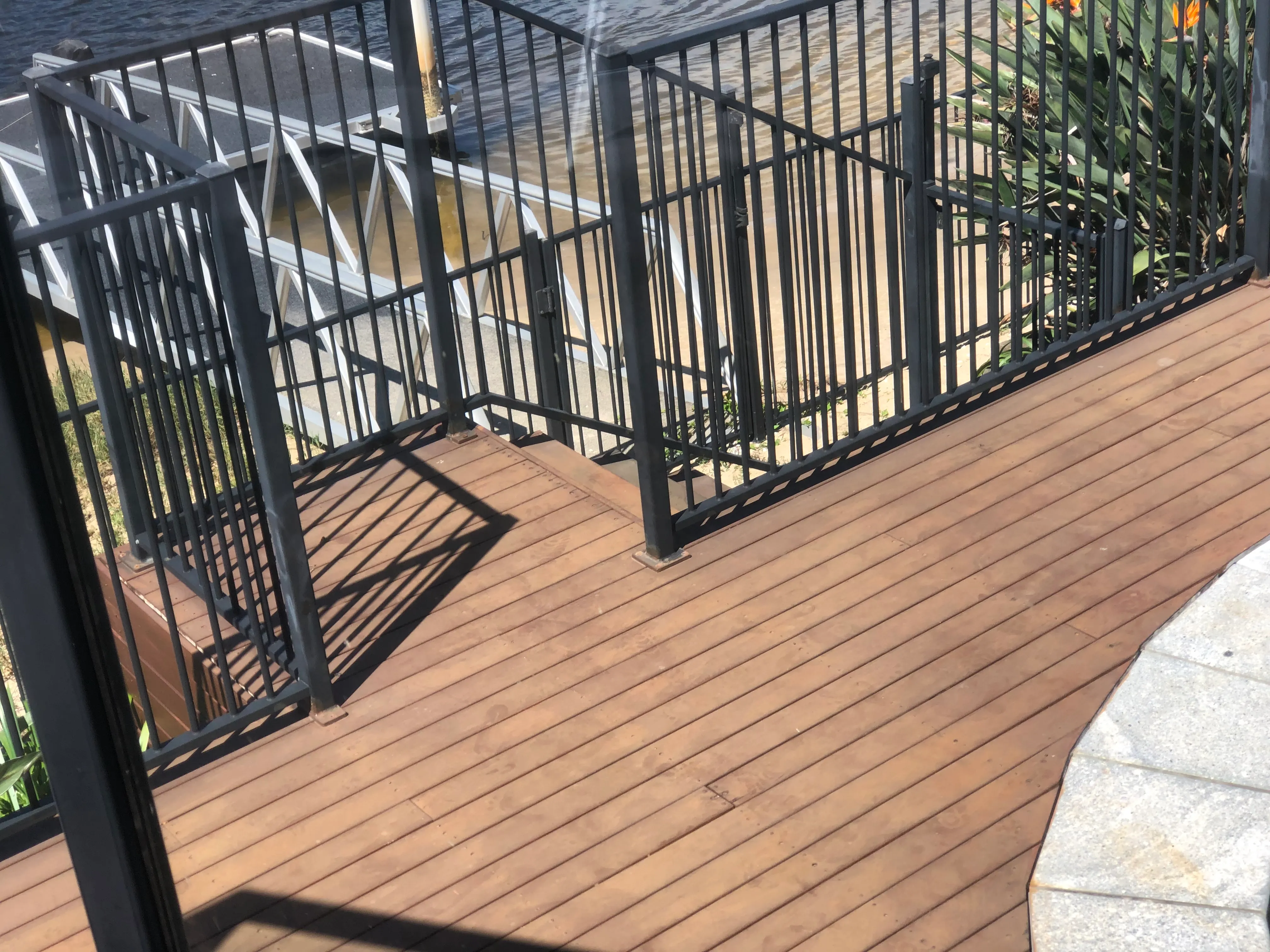
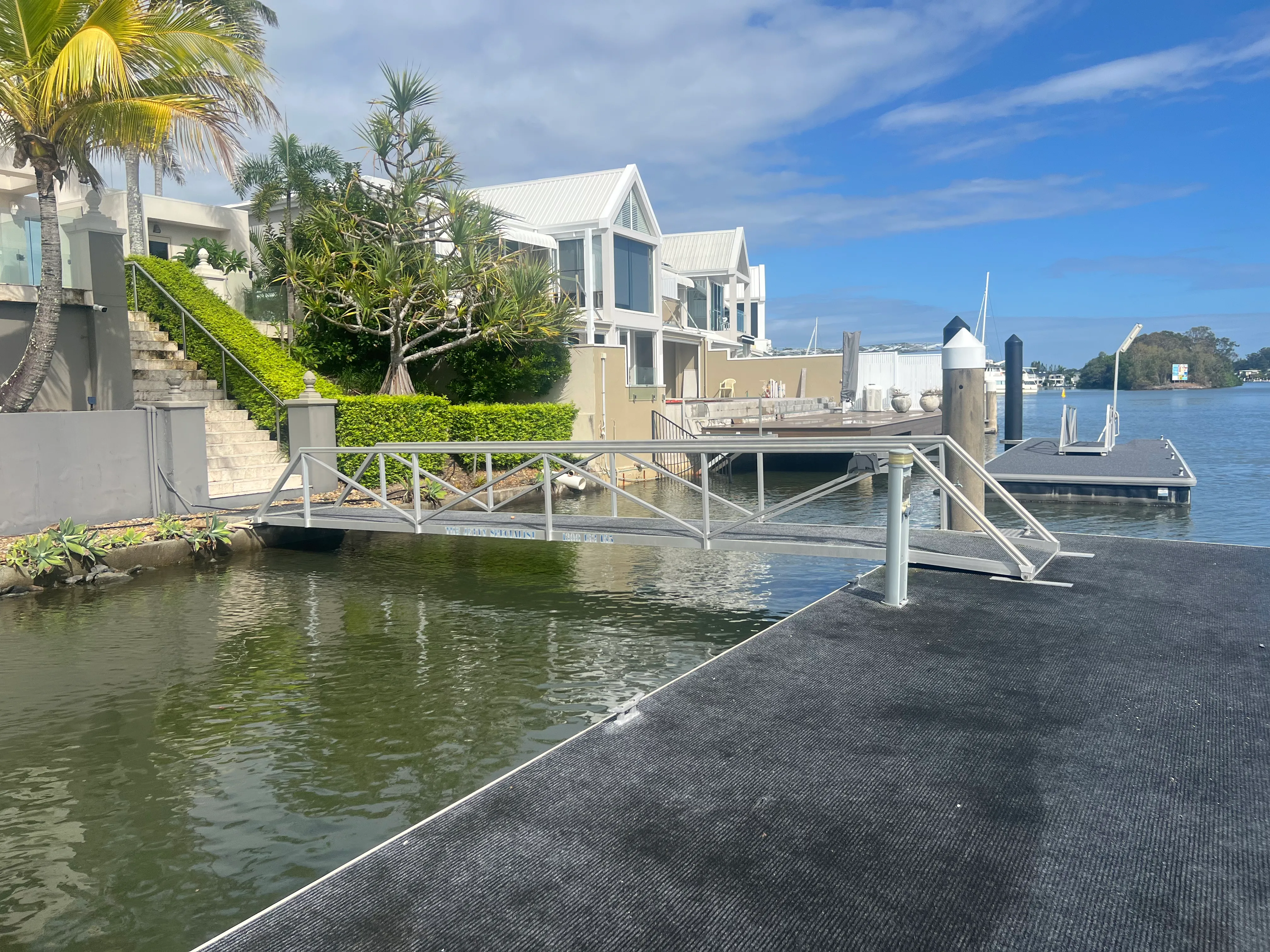
Jetties aren’t decks. They take twice the weather, double the salt, and far less shade. The finish on a jetty is the only thing standing between the timber and the slow breakdown that ends in a full rebuild.
The short answer
For Gold Coast waterfront timber, plan for:
- Yearly reseal on unsheltered, open-water jetties.
- Every 18–24 months on partially sheltered jetties with some shade cover.
- Every 2–3 years on sheltered pontoon walkways that see little direct UV.
Those are guides, not gospel. The timber will tell you when it’s time, if you know what to look for.
Four signs the finish is done
1. Water stops beading
Flick water onto a clean patch. If it pools and soaks in within ten seconds, the finish has broken down. That’s the first sign, and it’s the earliest window to act in.
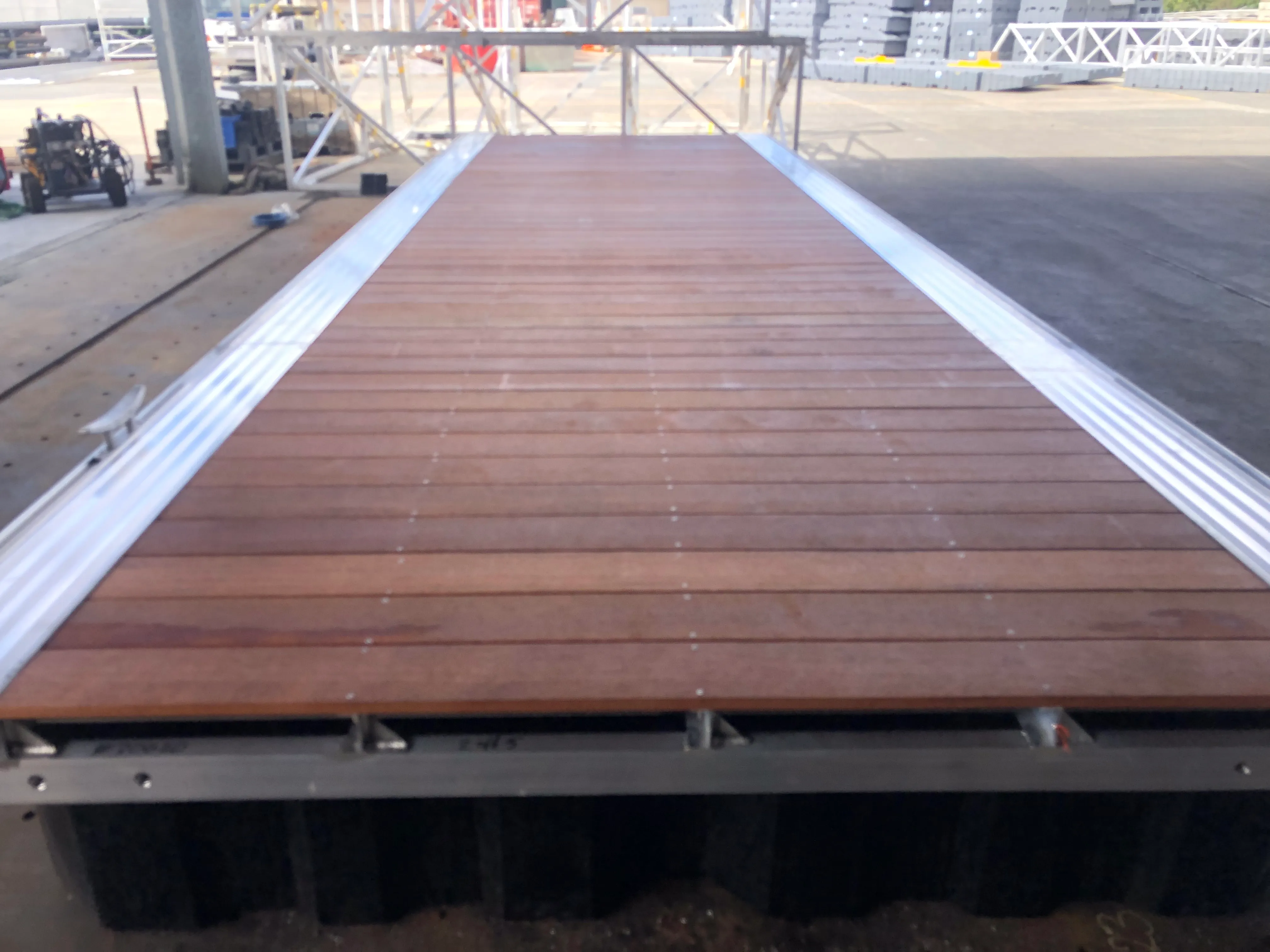
2. Timber looks grey, not brown
Silvering is UV breakdown. Once the timber has gone flat grey, the finish is gone and the top layer of timber is being degraded by the sun. Light grey patches are easy to sand back; deep grey with surface cracking takes more work.
3. Fixings start to weep
Stainless steel screws and bolts don’t rust, but they do work loose when the surrounding timber swells and shrinks without a finish to regulate moisture. If you see dark streaks running from a fixing, the timber around that fixing is moving.
4. End-grain starts to check
End-grain is the vulnerable edge. When the finish fails, end-grain dries too fast and small splits open up. Left alone, those splits become entry points for water, and water is how rot starts.
The day you spot checked end-grain is the day the timer on your reseal started. Not before.
Why the “every two years” advice fails here
Inland advice assumes soft sun, low humidity, and occasional rain. Gold Coast waterfront timber gets:
- Direct sun most of the year.
- Salt spray carried on every onshore breeze.
- Tidal moisture soaking the underside daily.
- Storm-season rainfall that drives water deep into exposed grain.
All of it ages the finish faster. Two-year advice is built for Melbourne. For our coast, plan yearly and adjust if the timber says otherwise.
What “resealing” actually involves
A reseal done properly isn’t just another coat. It’s:
- A full clean — salt residue off, mould spores off, fine surface fuzz off.
- A light sand on high-wear areas.
- End-grain sealed with the same product at extra coverage.
- Two coats minimum, back-rolled so no pooling sits on the surface.
- Fixings checked and any loose ones pulled, re-bedded, replaced.
Skipping any of those steps is how a reseal becomes a year-and-a-bit job instead of a two-year one.
What happens if you leave it
Leaving a failing finish for one more summer usually costs one or two extra boards. Leaving it for two more summers usually costs a full board run. Leaving it for three means you’re not resealing — you’re rebuilding.
The rebuild cost on a typical Gold Coast jetty sits several multiples of a reseal. The maths favours maintenance every time.
The short version
- Check beading, colour, fixings, end-grain each spring.
- Plan for yearly reseals on exposed jetties.
- Don’t wait for the grey to go dark.
- Get end-grain right — that’s where the damage starts.
Jetty or pontoon due a reseal? Get in touch — Scott handles restorations across the Gold Coast waterfront.