Placeholder copy — written to the final shape so design can be reviewed.
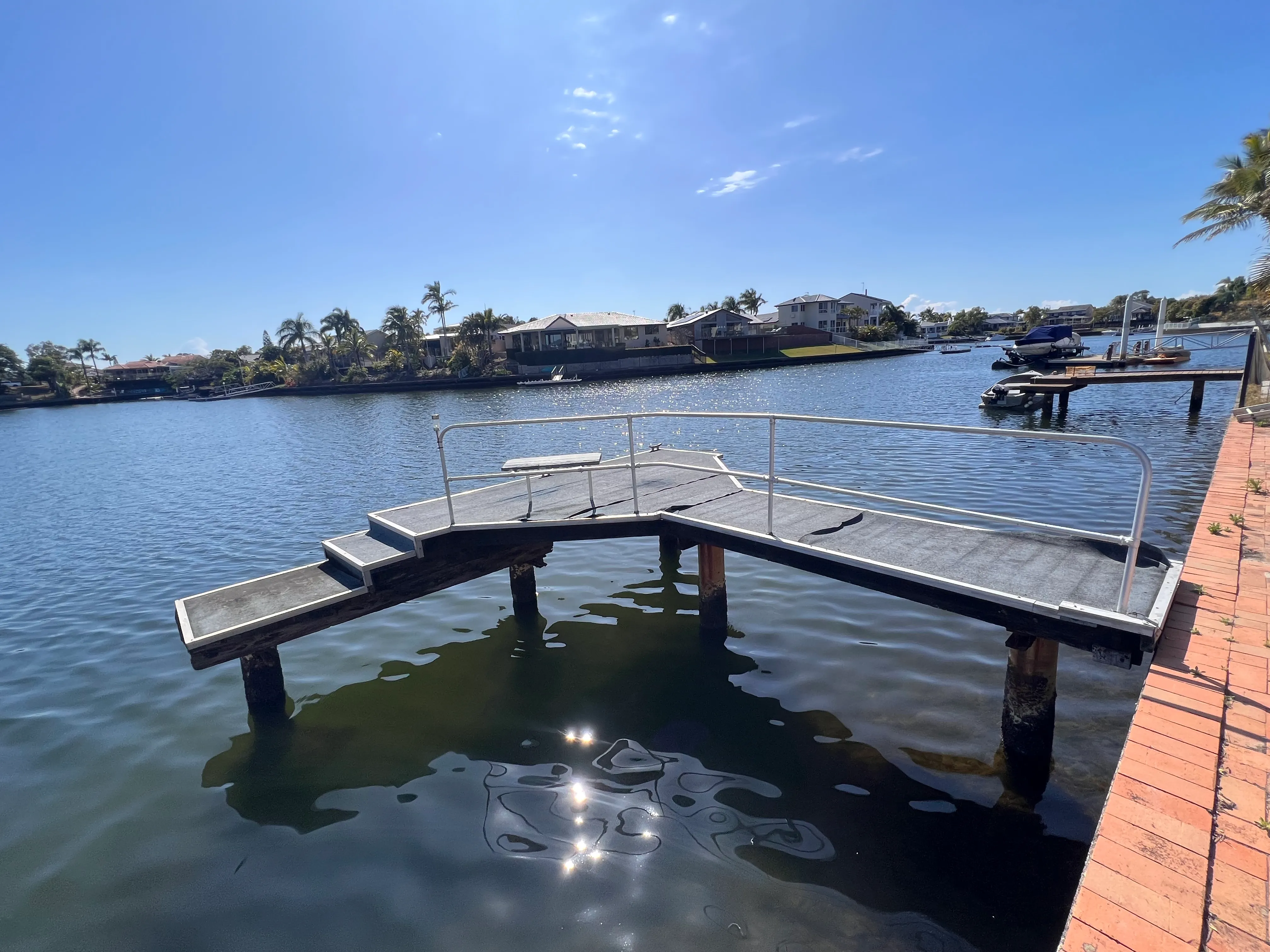
Replacement quotes for pontoons run into five figures fast. Most of the time, they don’t need to. A pontoon that looks tired isn’t the same as a pontoon that’s done — and knowing the difference saves thousands.
After more than a decade of pontoon work across the Gold Coast, these are the five patterns I see most often. Four of them point to repair. One points to replacement. The trick is knowing which one you’re looking at.
1. Surface timber is grey and splitting — but the structure is tight
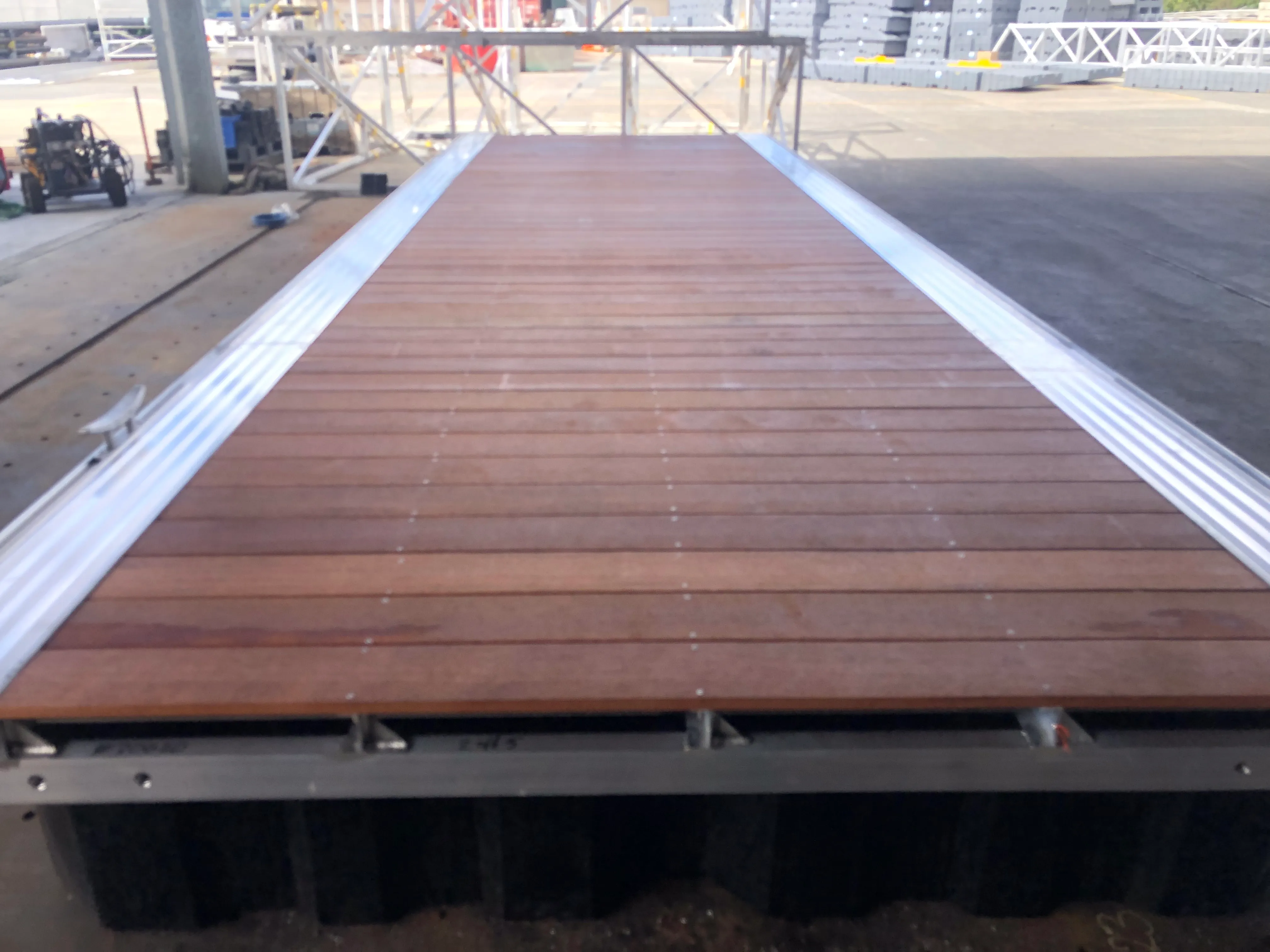
This is the most common pattern, and the one most often quoted as a rebuild. If the deck boards are silvered and split but the underlying joists, connectors, and floats are sound, you’re looking at a resurface — not a rebuild.
A resurface swaps out the top timber, reseals the structural frame, and gives another decade of life. Cost is a fraction of replacement.
What to check before assuming the worst
- Can you see the joists from underneath? Are they solid when tapped?
- Do the connector points between the deck and the float rock under weight?
- Is the timber grey across the surface, or is the damage localised to exposed edges?
If the answers are “yes, yes, surface only” — you’re almost certainly in repair territory.
2. Fixings are loose but holes are still clean
Fixings work loose over time. That’s normal. What matters is the hole.
- If the existing screw holes are clean and tight, you can re-fix with the same hardware or one size up.
- If the holes are oval-shaped, split, or crumbling at the edge, the board is finished — but usually only that board.
Localised board replacement is a half-day job, not a rebuild.
3. Float drums hold air
The floats are the expensive part. If they still hold air and aren’t waterlogged, you’re halfway there. Signs of healthy floats:
- Pontoon sits level, no corner dropping.
- No visible waterline creep on the drum sides.
- No rocking or pitching that wasn’t there five years ago.
A tired deck with healthy floats is a resurface. Don’t let anyone quote you a rebuild without checking the floats first.
Healthy floats under tired boards is the single biggest cost-saver on a pontoon inspection.
4. Handrails wobble
Loose handrails look serious but rarely are. The wobble usually traces back to a single worn connector or a cracked post base — both straightforward fixes. A handrail service is a morning’s work.
The exception is if the post itself has rotted at the base. Then it’s a post replacement, which is a longer job, but still local.
5. Hinges and stringers are stiff
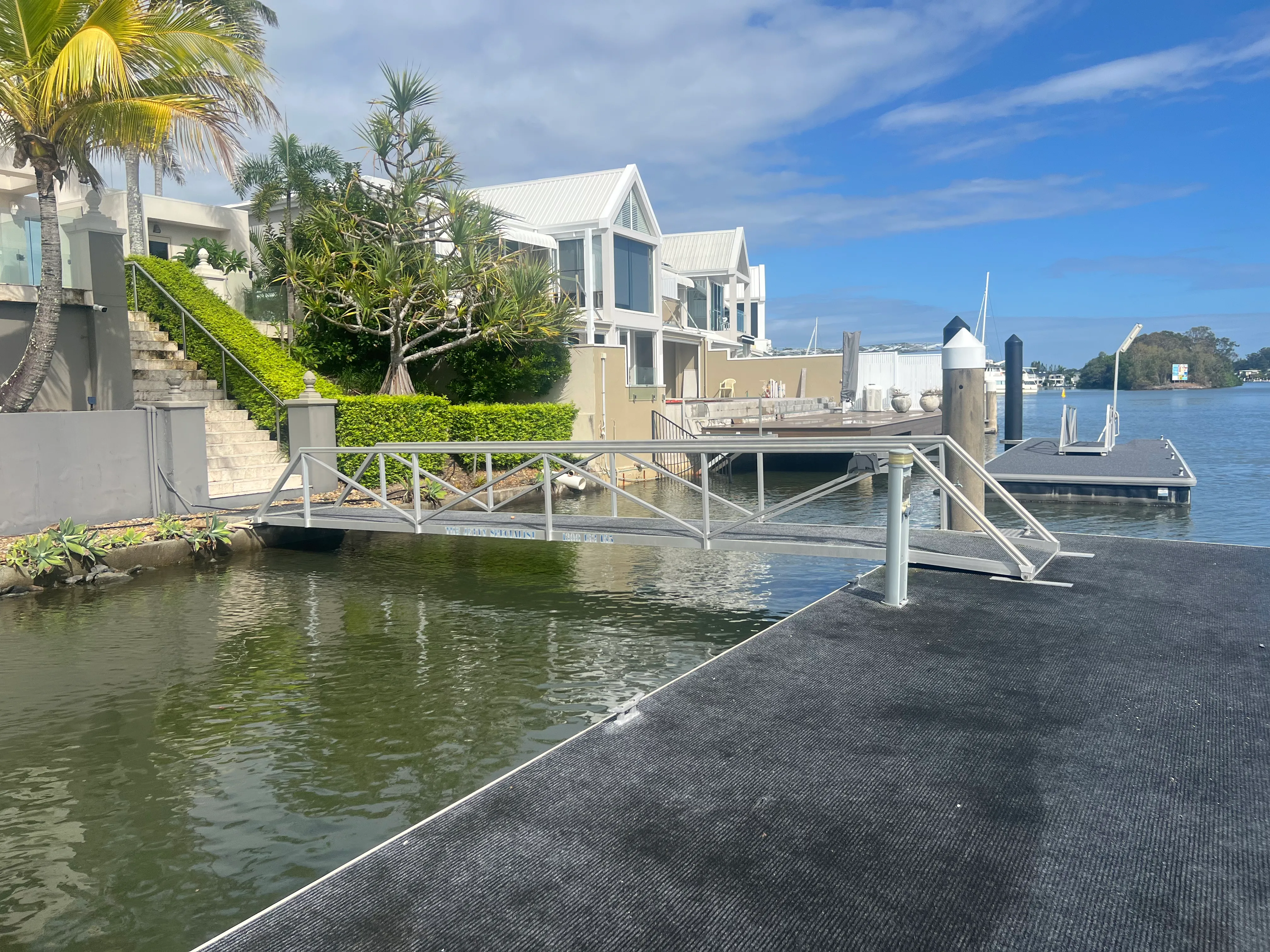
If the gangway is stiff, binding, or grinding through its tide range, the hinges and stringers have taken a beating — but they’re almost always replaceable without rebuilding the pontoon. This is corrosion wear, not structural failure.
A hinge service with new bearings and fresh grease restores the full tide range.
The one sign that means replacement
Structural frame rot — specifically in the main joists or the float-to-frame connectors — is the exception. If the frame underneath is soft, pulpy, or visibly failing, a repair is a patch, not a fix. That’s the rebuild conversation.
Telltale signs of frame rot:
- Soft, spongy joists when probed with a screwdriver.
- Visible sagging or twisting of the deck line.
- Floats pulling free of the frame under load.
- Dark staining running from structural fixings.
If two or more of those are present, replacement is usually the honest answer. If one is present and isolated, a structural repair is often still in range.
How to get an honest assessment
- Get two opinions. Ask each to explain what would make it a repair, and what would make it a rebuild.
- Ask to see the floats inspected, not just the deck.
- Ask for the quote broken into labour + materials + disposal. Full rebuilds swallow the detail; repairs can’t hide it.
A good tradesman will tell you when it’s a rebuild — and when it isn’t. The best quotes explain both options and let you choose.
Not sure if your pontoon needs a repair or a rebuild? Book an inspection — Scott walks the pontoon, checks the floats, and tells you straight.